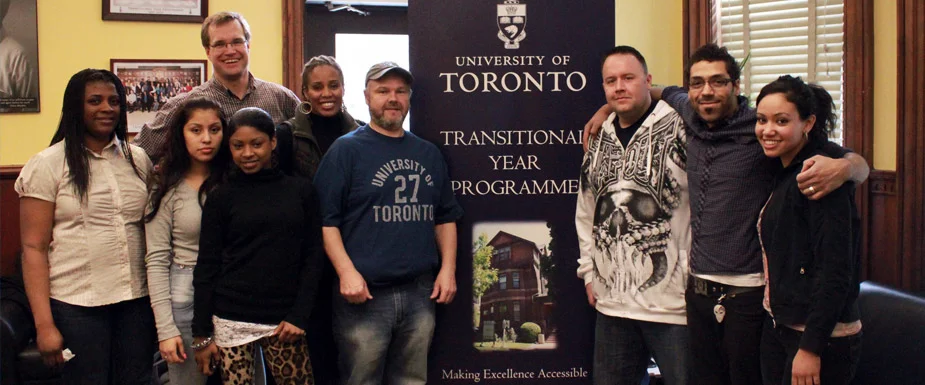
The Transitional Year Programme (TYP) offers individuals from a wide range of backgrounds who didn’t complete high school a chance to access post-secondary education. By completing the TYP courses, students are eligible to apply to a post-secondary degree and pursue otherwise inaccessible career paths.
Challenge: In order to modernize their web site, the TYP staff partnered with our student group with the goal of understanding the needs of their applicants and students. Our team conducted a generative research project that laid out their clients’ existing goals, pain points, and experiences in relation to the program, and offered recommendations for their web site in line with the administration’s capabilities.
Research methods used:
Focus groups (20 participants)
Interview (10 participants)
Survey (30 participants)
Recruitment session observation
4 Stakeholder interviews
Stakeholder Consultation
We began by consulting with the TYP staff to understand their organizational goals regarding their clients. We discovered that the programme had a limited digital outreach plan for potential applicants, and was falling short of their student retention goals. Given this, we set the scope of our research objectives around the application and enrollment phases of the TYP student experience.

User Research
In order to elicit understanding around our users’ information-gathering habits and needs, and their tech savvy, a questionnaire was distributed to thirty students. This provided us insight into our users’ expectations for the web site and when it has met and failed to meet those needs so far. We also extracted quantitative data around students’ feelings as they progressed through the application and student process that was graphed in our final deliverable.
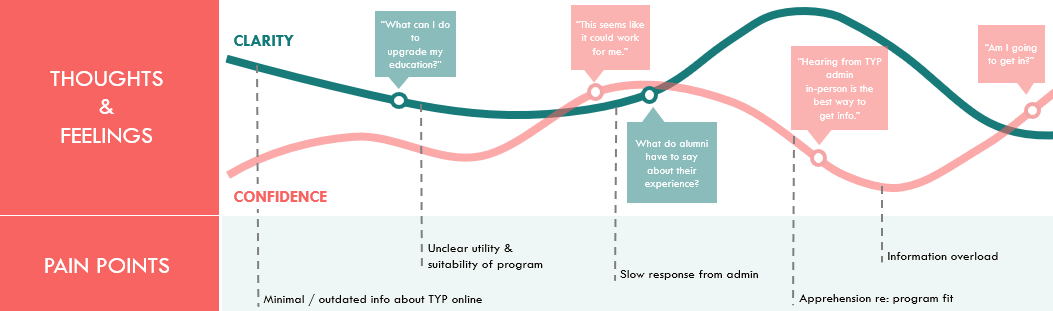
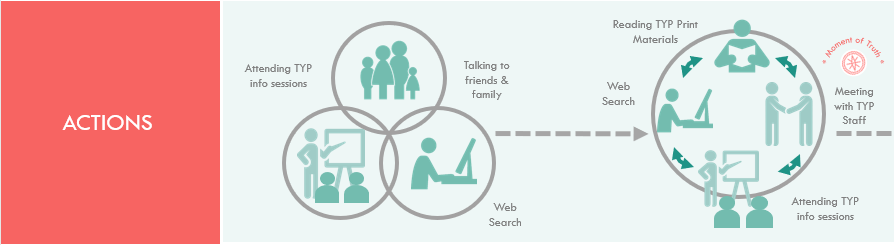
Our interviews and focus groups with students allowed us to probe deeper into their personal experiences with the program, and to better understand the diverse contexts through which they were approaching it (e.g., their everyday lives and educational backgrounds). Having these students detail each step of their experience with the program so far helped identify when the web site was useful and when it could potentially fill critical knowledge gaps.
Some of our most impactful findings included:
The emphasis on personal communication by the TYP administration, coupled with low staff numbers, created a communication bottleneck for applicants and students
Applicants and students alike had a hard time discovering the academic and financial assistance programs (grants, writing workshops, etc.) available to UofT students, dissuading potential applicants from applying and making academic success less attainable for current students
The intensity of feelings of alienation from the rest of the UofT community and institutions has a profound effect on motivation levels and student retention rates
Handing Off Our Insights
With the administration underutilizing their web site in their communication strategy, we decided to make a user journey map as it would allow us to outline their current practices in relation to the student experience, while providing space to highlight how an enhanced web site could assist with their organizational goals
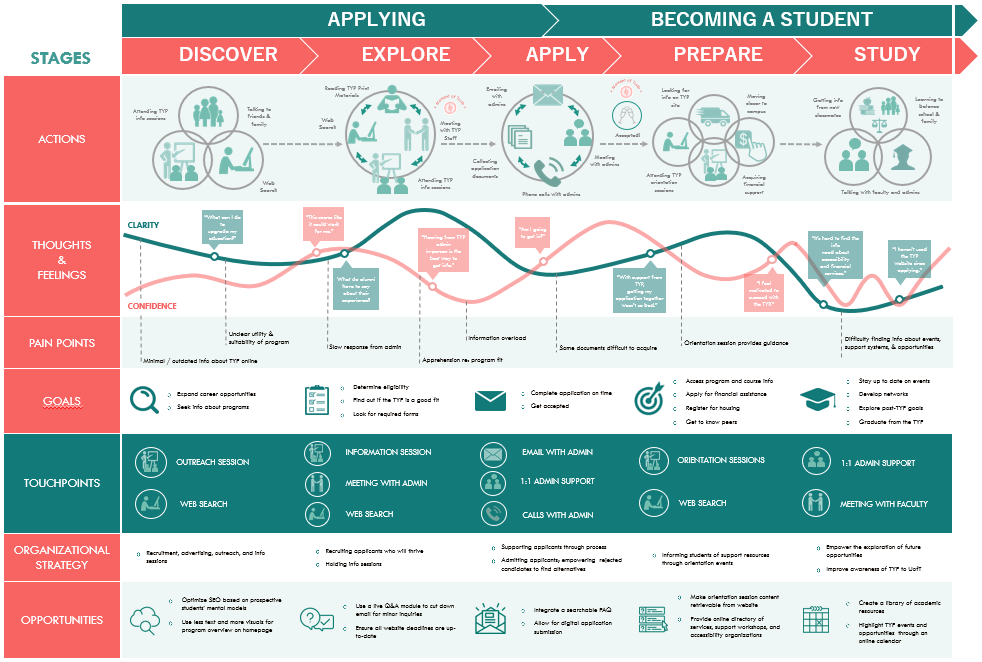
This diagram is intended to serve as an ongoing aid for the TYP administration both as they continue to develop their web site, and as they deliberate on how to best serve their applicants and students going forward. By providing the results of our research in an easily consumable and communicable format, the diagram better enables the TYP administration to align their efforts with the needs and behavioural tendencies of their students.