
FOUNDATIONAL RESEARCH: UNDERSTANDING ‘WHO’ AND ‘WHY’
Concept Validation and User Persona Data
Research began with a survey to understand what demographic might be best served by a digital transaction dispute process, and how Canadians are currently identifying irregular transactions.
Sample survey question:
When was the last time you experienced:
- A charge for something you didn’t buy?
- A double-charge for something you bought?
- An unexpected subscription charge originating from a free trial?
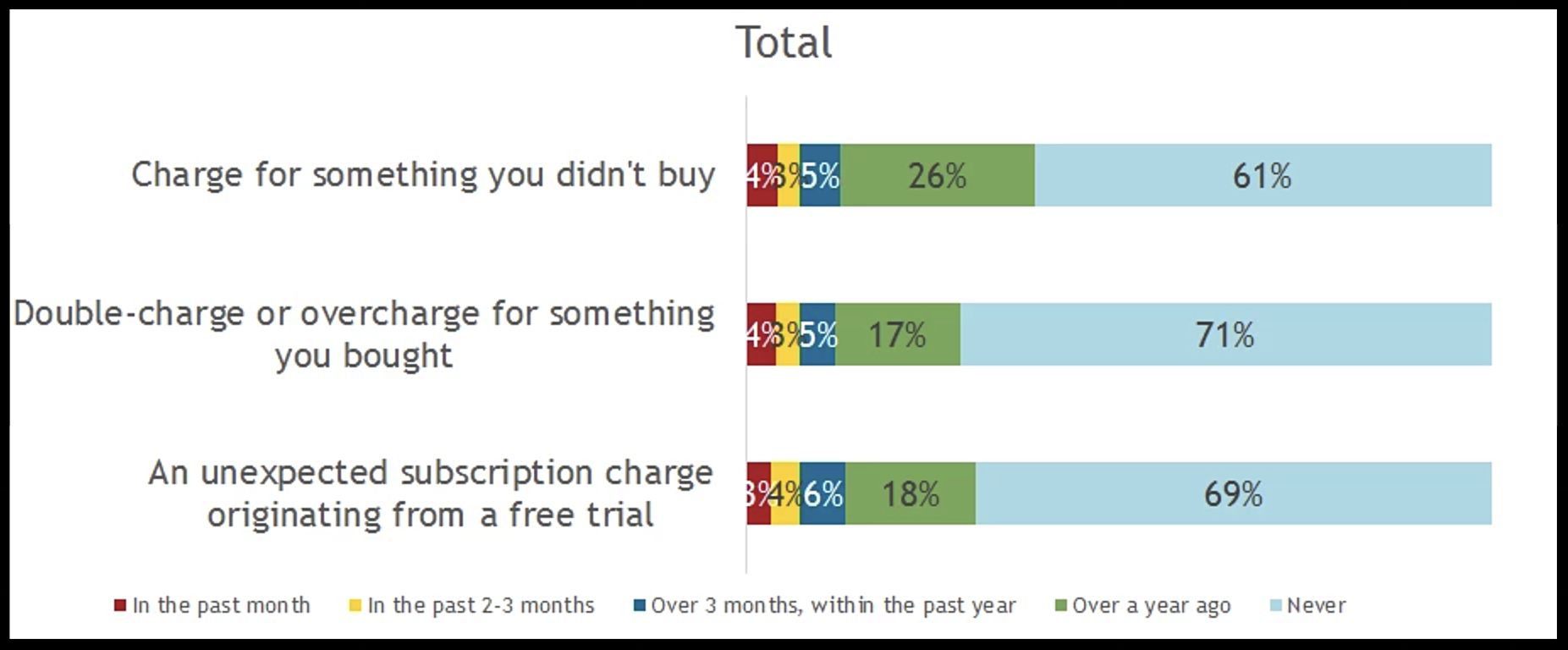
Survey data outlining the frequency of irregular transactions among 1,000+ Canadians
Secondary research and a competitive analysis provided early design inspiration, and identified a vaccuum in the market for this kind of service among Canadian banks — assuring us of the innovative nature of our solution.
DIRECTIONAL RESEARCH: THE USER’S ‘WHEN’ AND ‘WHERE’ LEADS TO OUR ‘WHAT’ AND ‘HOW’
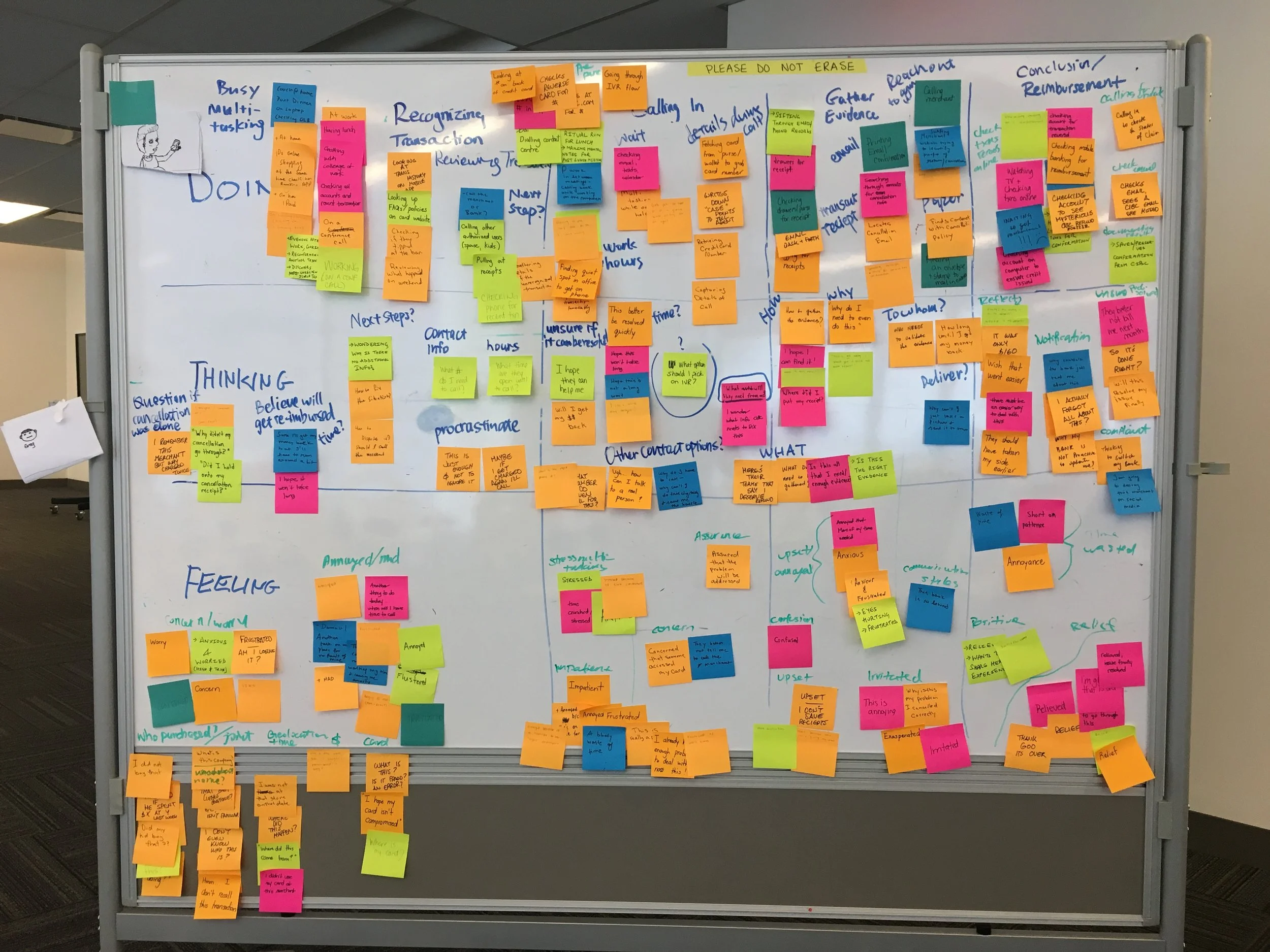
Call centre shadowing helped in creating this user journey map
User Journey Mapping and problem scoping
Looking at internal data from our call centre revealed the most common sources of disputed transactions, guiding us towards the most impactful user journey to focus on. To get as close as we could to the client at an early stage in the sprint, we shadowed call centre agents during live calls and interviewed them for their knowledge of the current client experience, probing for pain points and high points in the journey.
Our interviews with front-line staff revealed a new facet of fraud issues facing CIBC clients; the proactive fraud prevention systems that result in irregular purchases declined at point-of-sale, requiring clients to call the bank to unblock their purchase. Upon further review of internal data and further survey inquiries, we expanded the scope of our problem space to include this customer journey.
REFINEMENT: FINE-TUNING THE USER EXPERIENCE
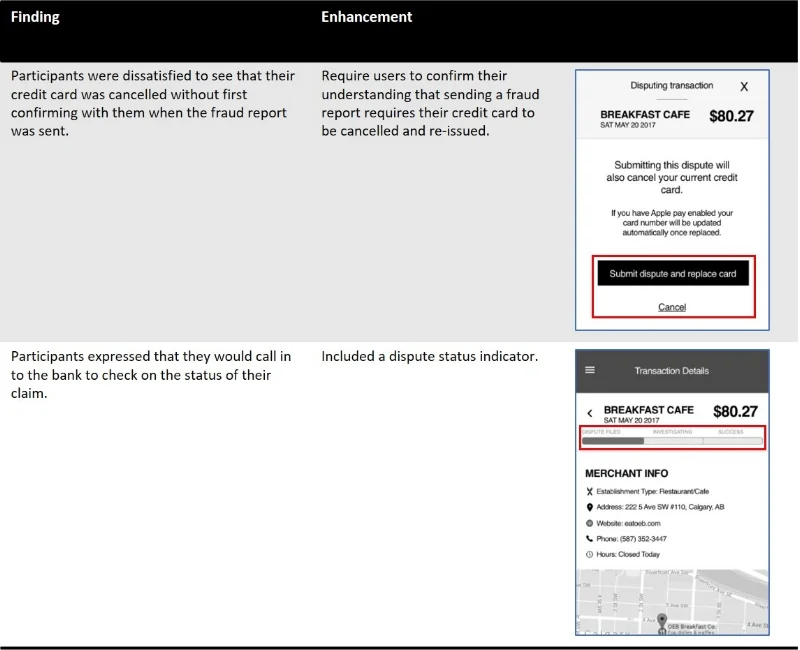
With the support of our initial research, our design lead prototyped our solutions for testing and refinement. This prototype was used for guerilla testing and a cognitive walkthrough, refining the proposed UI and taskflow. A sample of our findings and iteration is available below:
Concluding Thoughts
Upon final delivery of our work, UX research uncovered that clients have accepted transaction disputes as a necessary inconvenience, but would favour a digital solution over a call-based one. Therefore, implementing an omni-channel transaction dispute service represents a strong opportunity to not only positively impact client experience, but reduce call centre volume as well.